GREAT WALL OF CHINA History of the Great Wall of China: The Great Wall of China is the national military defense project in the cold weapon war era with the longest time and the largest amount of construction in the world. It condenses the sweat and wisdom of our ancestors and is the symbol and pride of the Chinese nation. According to historical records, since the Warring States period, more than 20 vassals and feudal dynasties have built the Great Wall. The earliest was the Chu Kingdom. To defend the nomadic or enemy countries in the north, they began to build the Great Wall. Subsequently, Qi, Yan, Wei, Zhao, Qin, and other countries also began to build their own Great Wall for the same purpose. After Qin unified the six countries, the famous emperor Qin Shihuang sent Meng Tian northward to the Xiongnu, connecting the Great Walls of various countries. From Linyao in the west to Liaodong in the east, it stretched for more than 10,...
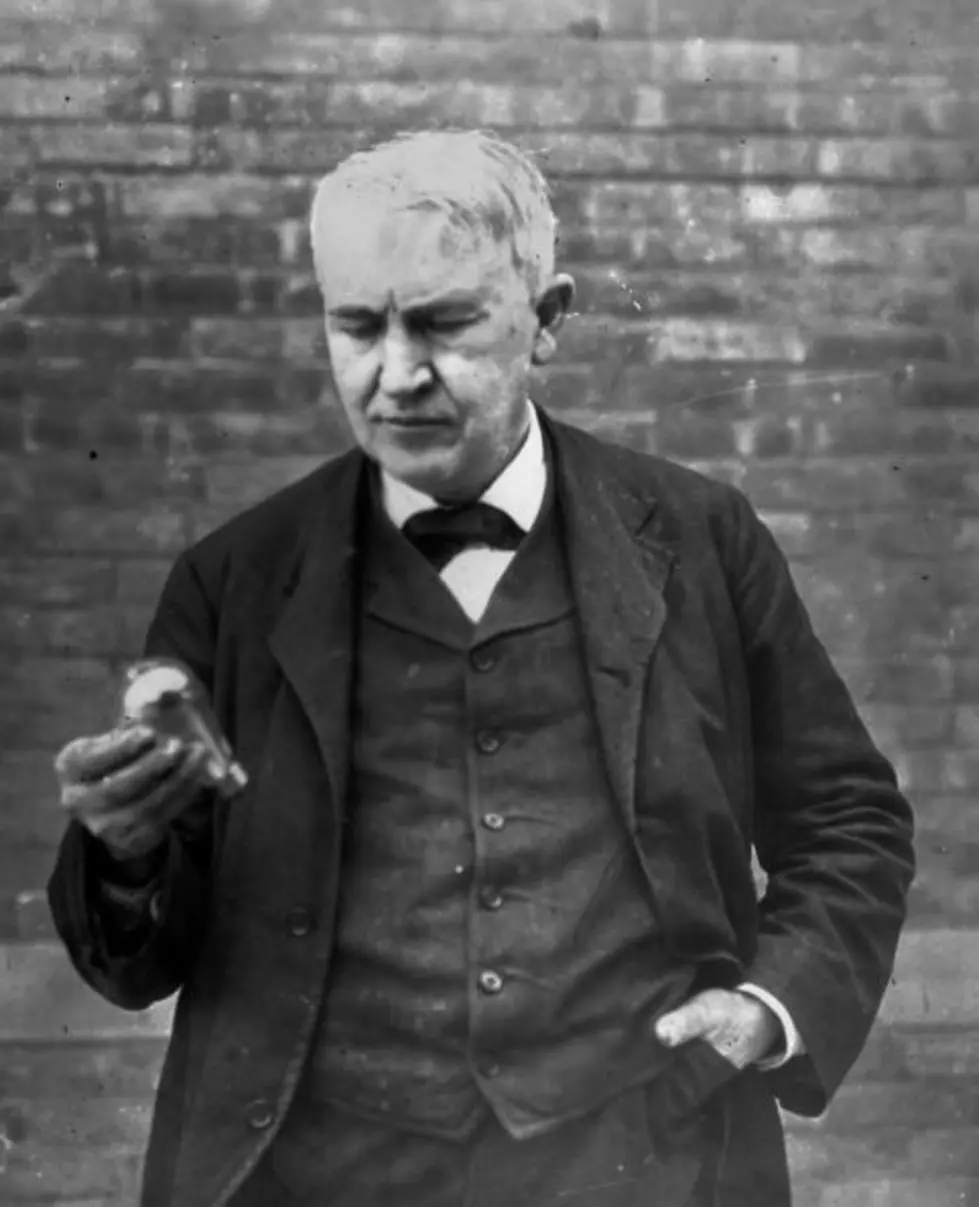
- Occupation: Businessman and Inventor
- Born: February 11, 1847 in Milan, Ohio
- Died: October 18, 1931 in West Orange, New Jersey
- Best known for: Inventing many useful items including the phonograph and a practical light bulb
Biography:
Thomas Edison may be the greatest inventor in history. He has over 1000 patents in his name. Many of his inventions still have a major effect on our lives today. He was also a business entrepreneur. Several of his inventions were group efforts in his large invention laboratory where he had lots of people working for him to help develop, build, and test his inventions. Edison used his inventions to form companies including General Electric, which is one of the biggest corporations in the world today.
Where did Edison grow up?
Thomas Edison was born in Milan, Ohio on February 11, 1847. His family soon moved to Port Huron, Michigan where he spent most of his childhood. Surprisingly, he did not do well in school and ended up being home schooled by his mother. Thomas was an enterprising young man, selling vegetables, candy and newspapers on trains. One day he saved a child from a runaway train. The child's father repaid Edison by training him as a telegraph operator. As a telegraph operator, Thomas became interested in communications, which would be the focus of many of his inventions.
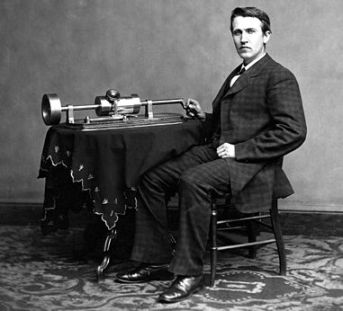
Edison and Phonograph
by Levin C. Handy
What was Menlo Park?
Menlo Park, New Jersey is where Thomas Edison built his research labs. This was the first business or institution with the sole purpose of inventing. They would do research and science and then apply it to practical applications that could be manufactured and built on a large scale. There were a lot of employees working for Edison at Menlo Park. These workers were inventors, too, and did a lot of work on Edison's ideas to help turn them into inventions.
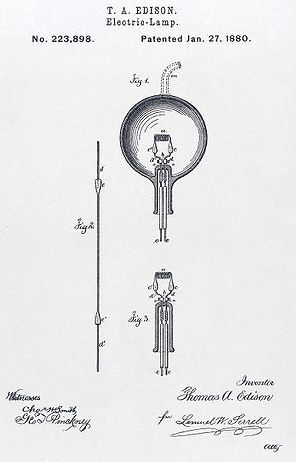
Light Bulb Patent Application
by Thomas Edison
What are Thomas Edison's most famous inventions?
Thomas Edison has the patents and credits for many inventions. Three of his most famous include:
The Phonograph - This was the first major invention by Edison and made him famous. It was the first machine that was able to record and playback sound.
Light Bulb - Although he did not invent the first electric light, Edison made the first practical electric light bulb that could be manufactured and used in the home. He also invented other items that were needed to make the light bulb practical for use in homes including safety fuses and on/off switches for light sockets.
The Motion Picture - Edison did a lot of work in creating the motion picture camera and helping move forward the progress of practical movies.
Fun Facts About Thomas Edison
- His middle name was Alva and his family called him Al.
- His first two kids had the nicknames Dot and Dash.
- He set up his first lab in his parent's basement at the age of 10.
- He was partially deaf.
- His first invention was an electric vote recorder.
- His 1093 patents are the most on record.
- He said the words to "Mary had a little lamb" as the first recorded voice on the phonograph.
- Occupation: Businessman and Inventor
- Born: February 11, 1847 in Milan, Ohio
- Died: October 18, 1931 in West Orange, New Jersey
- Best known for: Inventing many useful items including the phonograph and a practical light bulb
Thomas Edison may be the greatest inventor in history. He has over 1000 patents in his name. Many of his inventions still have a major effect on our lives today. He was also a business entrepreneur. Several of his inventions were group efforts in his large invention laboratory where he had lots of people working for him to help develop, build, and test his inventions. Edison used his inventions to form companies including General Electric, which is one of the biggest corporations in the world today.
Where did Edison grow up?
Thomas Edison was born in Milan, Ohio on February 11, 1847. His family soon moved to Port Huron, Michigan where he spent most of his childhood. Surprisingly, he did not do well in school and ended up being home schooled by his mother. Thomas was an enterprising young man, selling vegetables, candy and newspapers on trains. One day he saved a child from a runaway train. The child's father repaid Edison by training him as a telegraph operator. As a telegraph operator, Thomas became interested in communications, which would be the focus of many of his inventions.
Edison and Phonograph
by Levin C. Handy
Menlo Park, New Jersey is where Thomas Edison built his research labs. This was the first business or institution with the sole purpose of inventing. They would do research and science and then apply it to practical applications that could be manufactured and built on a large scale. There were a lot of employees working for Edison at Menlo Park. These workers were inventors, too, and did a lot of work on Edison's ideas to help turn them into inventions.
Light Bulb Patent Application
by Thomas Edison
What are Thomas Edison's most famous inventions?
Thomas Edison has the patents and credits for many inventions. Three of his most famous include:
The Phonograph - This was the first major invention by Edison and made him famous. It was the first machine that was able to record and playback sound.
Light Bulb - Although he did not invent the first electric light, Edison made the first practical electric light bulb that could be manufactured and used in the home. He also invented other items that were needed to make the light bulb practical for use in homes including safety fuses and on/off switches for light sockets.
The Motion Picture - Edison did a lot of work in creating the motion picture camera and helping move forward the progress of practical movies.
- His middle name was Alva and his family called him Al.
- His first two kids had the nicknames Dot and Dash.
- He set up his first lab in his parent's basement at the age of 10.
- He was partially deaf.
- His first invention was an electric vote recorder.
- His 1093 patents are the most on record.
- He said the words to "Mary had a little lamb" as the first recorded voice on the phonograph.
Comments
Post a Comment
Please do not enter any spam link in the comment box.